
CDMP certification: From Data Policy to Data Proficiency

The rise of data management as a strategic priority
Data is no longer a by-product of business operations, but a strategic tool for growth, innovation, and compliance. In virtually every sector, from government to finance and retail, organizations depend on data to optimize processes and make strategic decisions.
However, this does not happen automatically. The increasing amount of data brings challenges, such as data quality, security, and governance. Certified data management plays a crucial role in this. The Certified Data Management Professional (CDMP) certification offers an internationally recognized framework that helps to apply data management principles in a sustainable, controllable, and responsible manner within organizations.
What is CDMP and why is certification valuable?
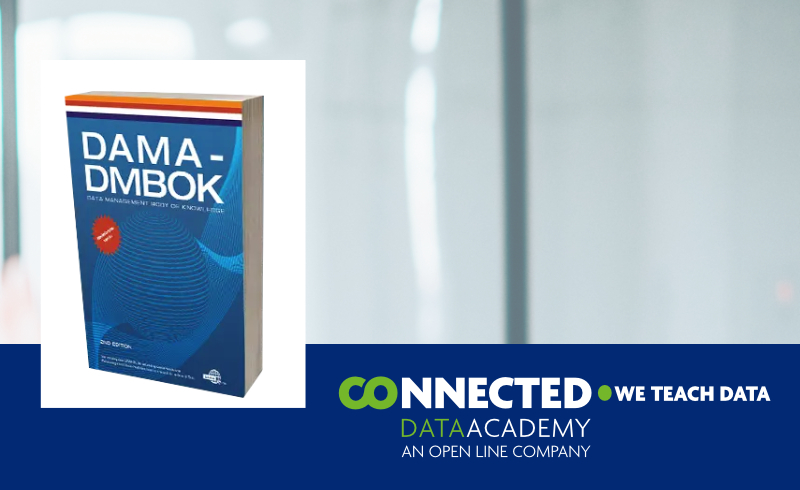
CDMP certification is based on the Data Management Body of Knowledge (DAMA-DMBoK2), a globally accepted standard that describes the fundamentals of data management. It provides professionals with a methodology for effectively managing data and organizations with a common language for data-driven working.
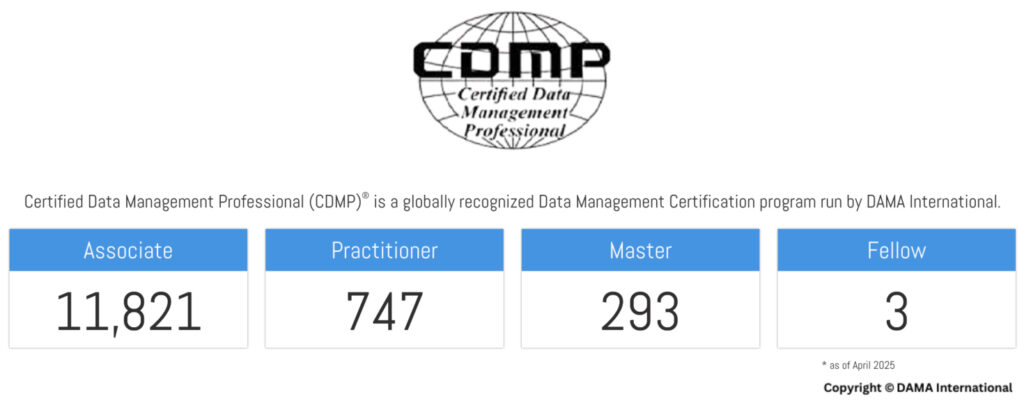
CDMP certification has four levels:
CDMP Associate – Basic level for every data professional.
CDMP Practitioner – Broad applicable knowledge within at least two data management domains.
CDMP Master – Demonstrable impact at a strategic level within organizations.
CDMP Fellow – Highest recognition, awarded exclusively by nomination.
Important themes within CDMP
Data quality – Reliable and consistent data form the basis for information management.
Metadata management – Data definitions, origin, and optimization of data use.
Data governance – Structure and responsibilities surrounding data management.
Compliance and privacy – Compliance with laws and regulations, such as the GDPR and ESG reporting.
The impact of certification on organizations
More and more organizations, including in the Netherlands, are using CDMP as a means of strengthening data skills. Government agencies such as the Tax and Customs Administration, CBS, DNB, and UWV have certified professionals, as have financial and commercial players such as a.s.r., FMO, Van Lanschot Kempen, and Schiphol.
The main advantage of CDMP certification is that it is not an end in itself, but a means of improvement. Organizations that apply it successfully notice, for example:
– Better collaboration through a common data language.
– Improved compliance and data quality through clear guidelines.
– More efficient data use through integrated governance models.
Effective application of CDMP in practice
Successful implementation of CDMP requires more than just certification; it must be embedded in the organizational culture. Organizations that embrace CDMP often see broader changes such as:
– The establishment of data governance boards.
– The appointment of data stewards within departments.
– The integration of data management into strategic decision-making.
When choosing a CDMP training approach, it is essential to look beyond the theory. Successful programs are characterized by:
Depth of content – Understanding why something is important, not just what it is.
Practical focus – Working with recognizable cases and examples from your own organization.
Contextual relevance – Aligning with sector, maturity level, and strategic goals.
Practical lessons from CDMP implementations
Linking CDMP training to ongoing initiatives, such as data quality improvement, compliance, and digitization, makes the learning experience more relevant and effective. The real impact only comes when principles are not only understood but also actively applied.
A tick-the-box approach rarely leads to lasting change—CDMP works best when organizations adopt these proven principles:
1. Start small, but think big – Start with a pilot group, but keep the broader goal in mind.
2. Secure executive support – Without management support, data management often remains operational and lacks strategic impact.
3. Connect with existing initiatives – Integrate CDMP into ongoing projects and strategic themes to achieve maximum effectiveness.
4. Make it measurable – Set clear goals, track progress, and celebrate successes, no matter how small.
Data management is a continuous learning process. Through knowledge sharing and structured application of CDMP principles, organizations can achieve sustainable improvements and take full advantage of data-driven opportunities.
The role of CDMP in data-driven developments
The demand for data skills will grow exponentially in the coming years, not only among IT specialists, but also among policymakers, lawyers, marketers, and other professionals who work with data on a daily basis.
CDMP ties in well with broader developments such as:
ESG reporting – Transparency about sustainability and social impact.
AI governance – Responsible use of algorithms and automation.
Digital ethics – Balance between innovation and social values.
By positioning data management as a strategic theme, organizations can lead the way in innovation and compliance. At the same time, they strengthen their data maturity by using CDMP to create a data culture characterized by transparency, ownership, collaboration, and continuous improvement.
CDMP as a strategic starting point
CDMP certification is much more than a diploma. It is a tool for strengthening data skills, improving data quality, and developing a mature data culture. For organizations that want to excel in data-driven operations, CDMP is not an end point, but a strategic starting point—a foundation for growth, collaboration, and social impact.
Discover how your organization can use CDMP as a lever for data-driven working.
Interested in CDMP training and certification?